Golf at Altitude:
Mountain Elevation and Golf Performance
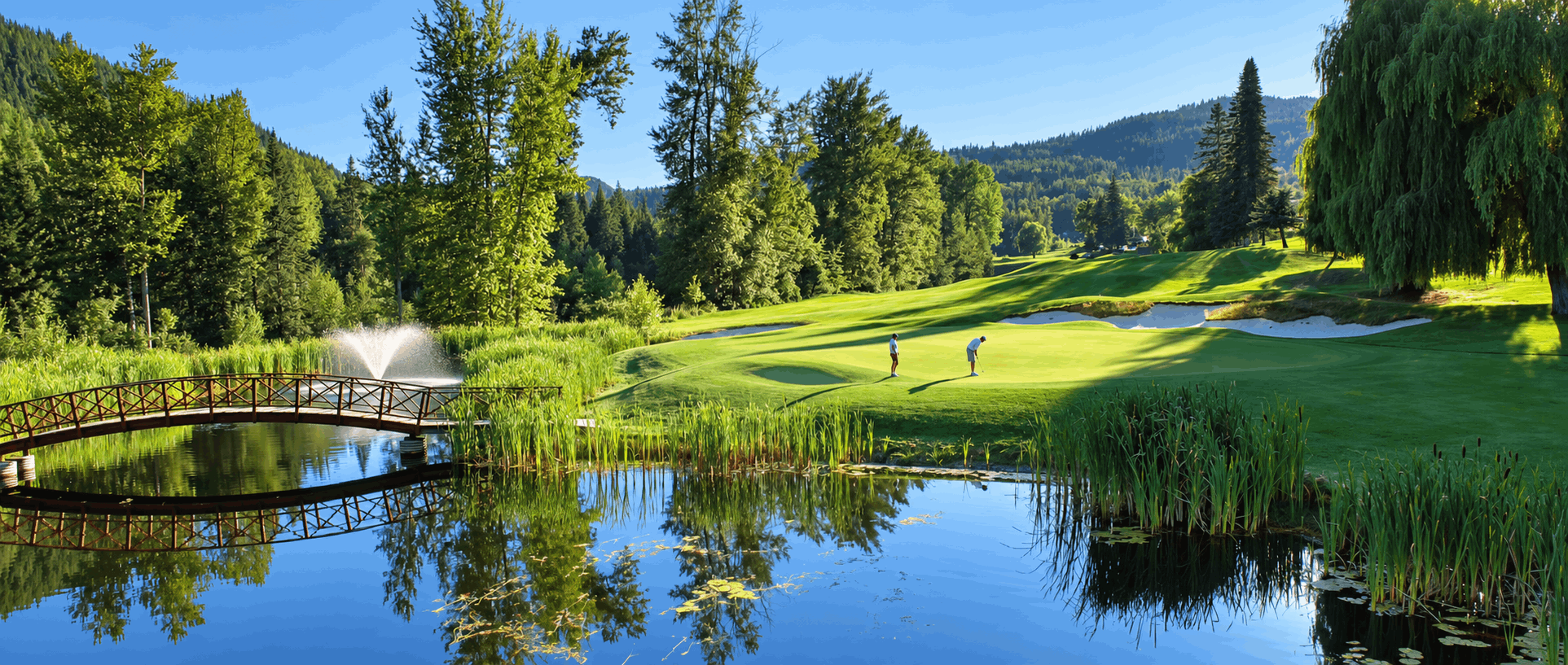
Thin air adds yards. Steep tee boxes add more. Here’s how to tell the two apart before you pull the wrong club.
Golf at altitude adds roughly 1.2 to 2 percent of carry distance for every 1,000 feet above sea level, because thinner air creates less drag on the ball. At around 3,000 feet, a 150-yard 7-iron typically carries 155 to 159 yards. Uphill and downhill shots are a separate adjustment, and on mountain courses they often matter more.
That last sentence is the one most visitors miss.
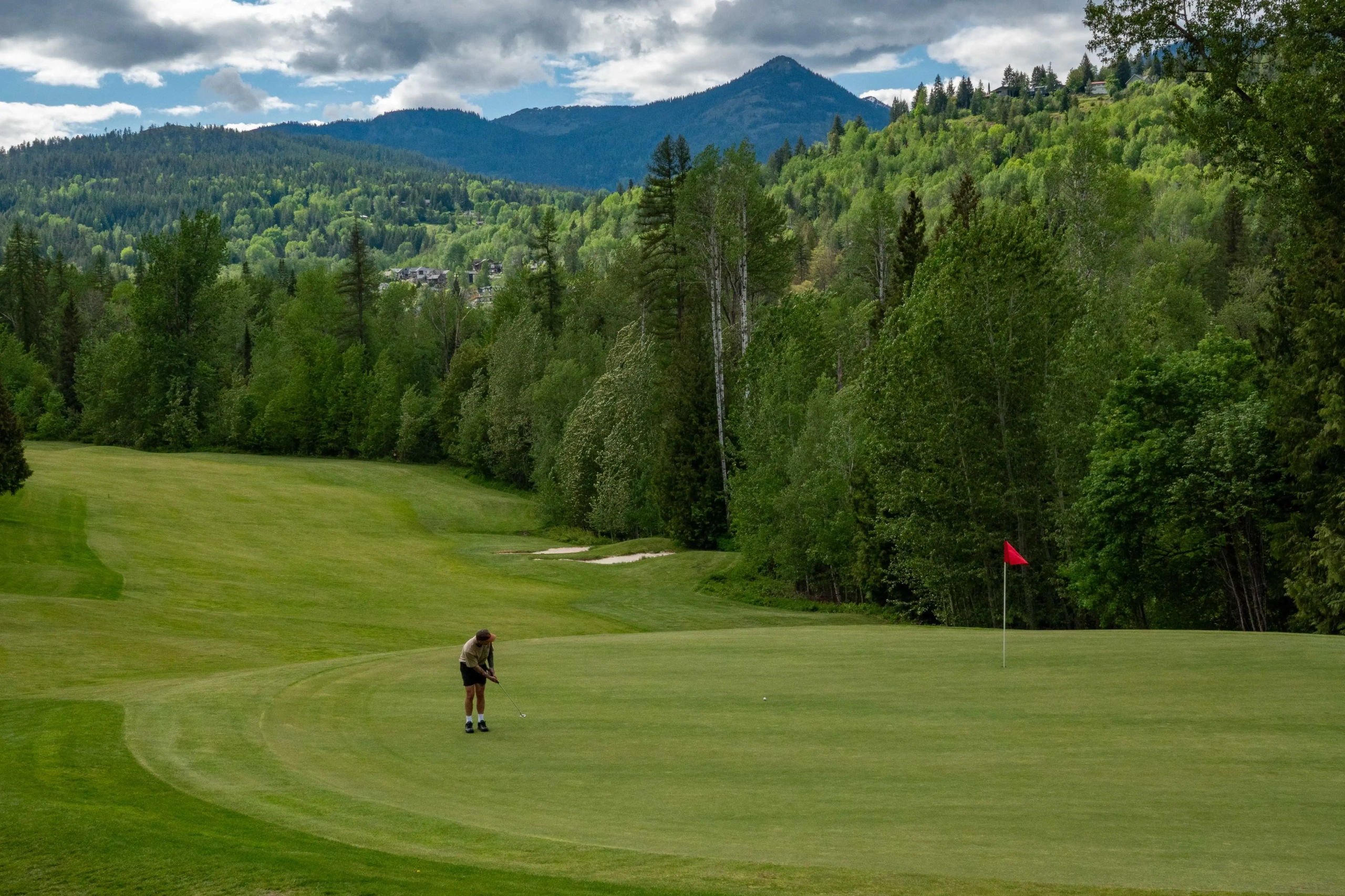
Picture a group of golfers driving in from the coast for their first round at Redstone. They’ve read that the ball flies farther in the mountains, so they club down on every shot. Then they stand on an elevated tee, see the green far below, and club down again. Both adjustments make sense, but taking too little club can leave the ball short.
It’s one of the easiest mistakes to make on any mountain course. Here’s how we’d think it through instead.
How much farther does a golf ball actually fly at altitude?
Less than the locker-room rumour says. The popular figure is 2 percent per 1,000 feet, but launch-monitor modelling cited by MyGolfSpy puts it closer to 1.1 to 1.6 percent, with 1.2 percent as a practical middle.
TrackMan testing reported by GOLF.com found about 2.5 extra driver yards per 1,000 feet. Your swing speed and ball speed don’t change. Only the air does.
Here’s what that looks like at around 3,000 feet:
| Club | Sea-level carry (yds) | At 3,000 ft, 1.2% rule (yds) | At 3,000 ft, 2% rule (yds) |
| Driver | 250 | 259 | 265 |
| 5-iron | 180 | 186 | 191 |
| 7-iron | 150 | 155 | 159 |
| Pitching wedge | 120 | 124 | 127 |
| Half wedge | 60 | 62 | 64 |
Start with the low number
Use 1.2 percent for your first few holes, then adjust. Golfers with a low, penetrating flight tend to gain less than high-ball hitters, so the bigger figure often overshoots.
Notice the bottom rows, too. Inside 100 yards, altitude is worth two or three yards at most. Don’t let it into your head on a pitch shot.
Is it the altitude or the hill?
This is the part most altitude articles skip. Mountain golf hands you two separate elevations, and they need separate maths.
- Air elevation is your height above sea level. It’s constant all round and affects every full shot the same way.
- Shot elevation is the drop or climb between you and the target. It changes on every hole.
Mix them up and you double-count. Redstone shows why: all three front-nine par 3s play downhill, and BC Golf Guide reports 28 holes-in-one in the course’s first season. The hills were doing plenty of work on their own.
Run the plays-like yardage in this order
- Start with the measured distance to the target.
- Adjust for the slope. A common rule of thumb is one yard per three feet of drop or climb.
- Apply the altitude percentage once, to that adjusted number.
- Nudge for temperature, which we’ll get to below.
- Choose the club that carries the final number.
Say a downhill par 3 measures 170 yards with a 30-foot drop. The slope takes it to about 160. Divide by 1.036 for altitude and it plays roughly 154. That’s a 7-iron for many players who’d instinctively reach for a 5.
What else changes in thin air?
Distance gets the headlines. A few quieter effects matter just as much once you’re on the course.
Expect less curve, not less spin
The ball doesn’t spin any less at altitude. But thinner air has less to grip, so a slice or hook bends a little less and the flight sits a touch lower. Aim slightly less for your usual shape.
Respect the mountain morning
Cold air is denser. TrackMan data via GOLF.com puts it at roughly two driver yards per 10°F, while humidity barely registers.
An early tee time at 8°C versus a 26°C afternoon is about a 32°F swing, or roughly six driver yards. A chilly morning can cancel most of your altitude bonus. Valley mornings in the Kootenays start cool even in July.
Leave your driver setup alone
GOLF.com notes that ideal driver spin climbs at very high elevations. At around 3,000 feet, the difference is small. Play your normal gear and normal ball.
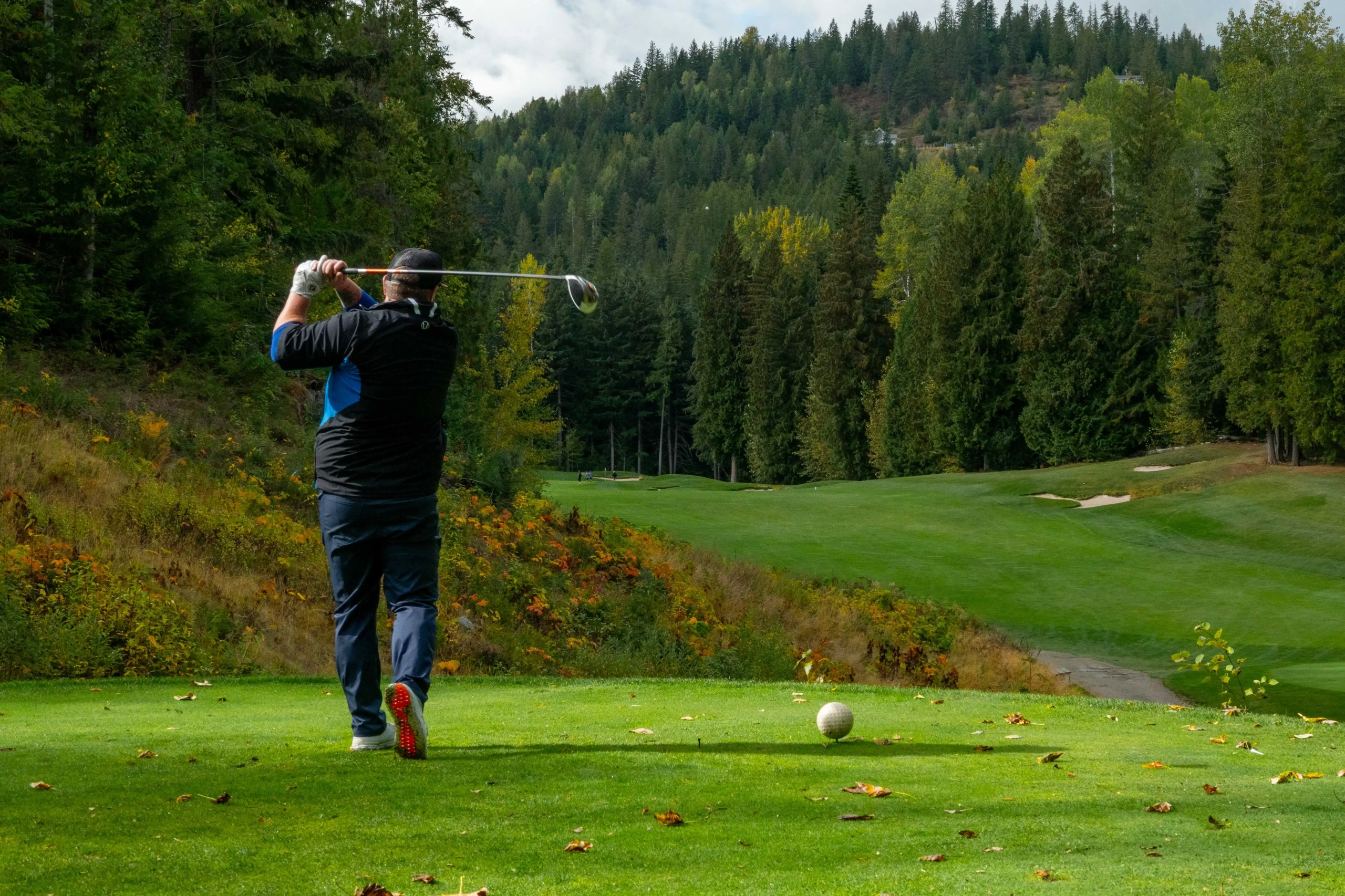
Should you change tees or clubs on a mountain course?
Change tees before clubs. Extra carry tempts people back a set, but Redstone’s tips run 6,863 yards, with the blues at 6,396, whites at 5,594 and reds at 5,015. Ravines, forest and deep bunkers punish a misjudged carry far more than a short one.
Use this before your first round at elevation:
- Know your sea-level carry for each club
- Start at 1.2 percent per 1,000 feet
- Use a slope rangefinder or note the drop on each tee
- Hit a few range balls and compare carry to your numbers
- Check the temperature at your tee time
- Reassess at the turn, not after one great drive
Questions we hear on the first tee
Does a golf ball really go farther in the mountains?
Yes, on full shots. Expect roughly 1 to 2 percent more carry per 1,000 feet of elevation, with the biggest yardage gains on your longest clubs.
Does altitude affect putting?
Not in any way you’ll feel. Green speed, grain and slope matter far more than air density on a rolling ball.
Should I switch golf balls at altitude?
Golfers who play regularly at very high elevations sometimes experiment with ball choice. At around 3,000 feet, your usual ball will do just fine.
Will altitude change my swing speed?
No. Altitude changes how the air treats the ball after impact, not how fast you swing or how fast the ball leaves the face.
What’s the quickest way to calculate plays-like yardage?
Adjust for slope first, then divide by 1 plus your altitude percentage. At 3,000 feet using the 1.2 percent rule, that’s dividing by 1.036.
Play the mountain, not the scorecard
Altitude gives you a few free yards. The hills decide whether you use them well.
Come test your numbers on our Les Furber signature layout this season. Book a tee time at Redstone or call 1-250-362-2214, and bring your rangefinder.